Gusto vs Namely: Comparison With Sunrise HCM
Gusto works best for small businesses under 100 employees that want payroll to stop being a distraction. Namely fits mid-sized companies with 50 to 1,000 employees whose HR teams need real talent management tools. Still deciding? Read the full breakdown below, or discover a third option that takes a completely different approach.
Quick Look at Gusto vs Namely vs Sunrise HCM
Key Features of Gusto
Gusto is a cloud-based payroll and HR platform built for small to mid-sized U.S. businesses. The Simple plan starts at $49/month plus $6 per employee. Plus runs $80/month plus $12 per employee and adds multi-state payroll and time tracking. Premium is custom-priced.
Pricing verified March 2026. Visit gusto.com for current rates.
What Businesses Use Gusto For
Gusto handles payroll processing automatically: federal 941/940 filings, state unemployment insurance, local tax compliance, multi-state nexus, W-2s, and 1095-C reporting. AutoPilot runs the full payroll cycle on a schedule without manual input. Gusto Wallet lets employees track earnings and access pay early, which improves employee engagement without HR involvement. The Gusto vs ADP comparison is worth reading if you're weighing a larger enterprise option at the same time.
Benefits
Benefits administration covers health insurance, dental, vision, and 401(k) with an open enrollment dashboard employees can navigate on their own. Unlimited payroll runs are included at every tier. Plus and Premium add an applicant tracking system, offer letters, and e-signatures for hiring and onboarding. See how payroll-first platforms compare against accounting-integrated options in the QuickBooks payroll vs Gusto breakdown.
Drawbacks
Time tracking requires Plus or above. Multi-state payroll isn't on Simple. Salesforce integration needs middleware. Performance management and talent management tools are thin, and the ceiling becomes obvious before 100 employees. Gusto vs BambooHR covers the comparison with a more HR-focused alternative.
Key Features of Namely
Namely is for companies that have grown past the "one person handles payroll" stage. It combines payroll, benefits management, time tracking, performance management, and talent management in one platform designed for dedicated HR teams. Namely doesn't publish pricing. You'll go through a demo before seeing numbers.
Pricing not publicly disclosed. Contact Namely for a current quote.
What Businesses Use Namely For
Tech, life sciences, finance, and non-profit companies use Namely where HR is a dedicated function and labor laws compliance is a daily concern. Namely's 360-degree feedback tools and competency mapping give HR teams real development infrastructure, not just annual review checkboxes. The social newsfeed supports employee engagement on distributed teams. For teams looking to use a Salesforce HRIS, Namely still requires middleware to connect.
Benefits
The open enrollment dashboard includes ACA-compliant reporting and electronic carrier feeds. Benefits deductions update automatically when they live alongside payroll data. Performance reviews support custom cycles, goal tracking, and 360-degree feedback frameworks, built for HR professionals who actually run these programs.
Drawbacks
Namely's support is its most consistent weak point. The pattern on G2 is clear: something breaks in payroll, you call support, and you get shuffled between the payroll team and the HRIS team because they're separate departments. Implementation takes four to eight weeks with active involvement from your side. The API has rate limits developers flag as constraining.
User Ratings
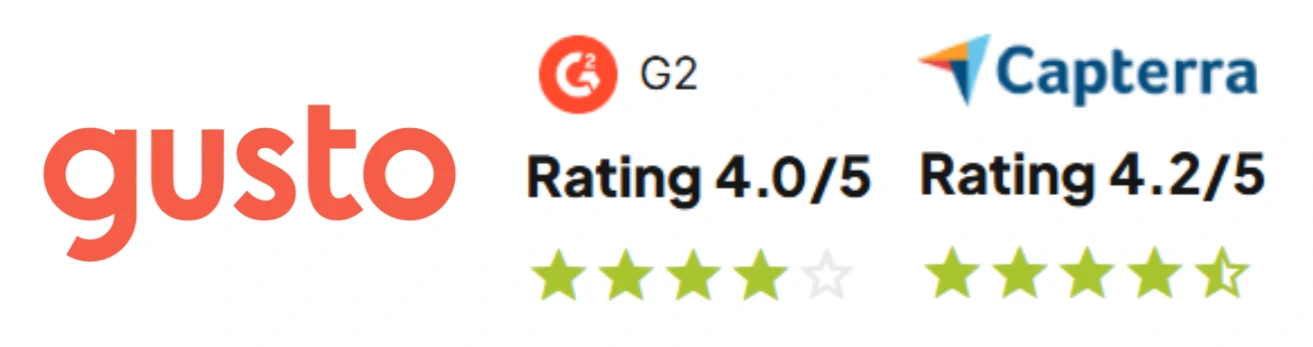
Gusto: G2: 4.6/5 based on 7,000+ reviews | Capterra: 4.6/5
Positive: "Setup was easy, payroll runs itself," Small Business Owner Critical: "Limited reporting for growing teams," Finance Manager
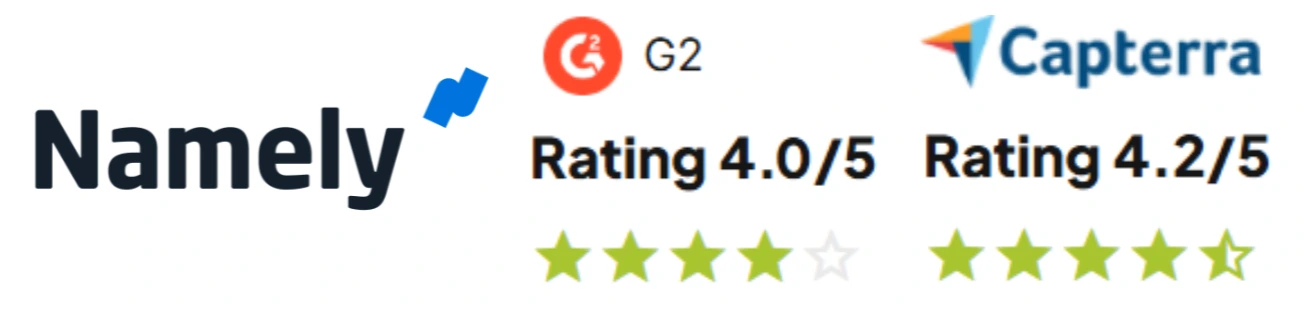
Namely: G2: 3.9/5 based on 400+ reviews | Capterra: 4.1/5
Positive: "Great HR tools, easy onboarding workflows," HR Director Critical: "Support bounces you between teams," Payroll Manager
Ratings and quotes from G2 and Capterra as of March 2026. Quotes shortened for clarity.
Namely vs Gusto: Important Criteria to Choose the Right Platform
The Gusto vs Namely comparison comes down to two different starting points: Gusto is built around payroll first, with HR layered on top. Namely starts from HR depth, with payroll built in. Gusto publishes pricing; Namely requires a quote. The sharpest gap: neither connects time tracking to client billing.
Payroll Processing
Gusto handles federal 941/940 filings, SUI, local tax compliance, multi-state nexus, W-2s, and 1095-C automatically. AutoPilot can run the entire cycle without anyone touching it. Namely handles more complex setups, including wage garnishments and payroll tied to HR data, but requires more hands-on attention and support resolution can be slow.
Winner: Gusto. More automated for standard U.S. payroll. Namely wins when configurations are genuinely complex.
The HR Side of Things
This is where the Gusto vs Namely gap is clearest. Namely was built for HR as a strategic function: competency mapping, 360-degree feedback, performance cycles with real structure, onboarding workflows that scale. Gusto's HR features work for small teams but were built around payroll first. You'll feel that ceiling before you hit 100 employees.
Winner: Namely. Stronger HR software for mid-sized teams with dedicated human resources staff.
Automation Features
Gusto automates payroll runs, tax filings, benefits deductions, and direct deposits with almost no setup. Namely goes deeper on HR workflow automation, but configuring onboarding sequences and promotion workflows typically requires support involvement.
Winner: Gusto. Payroll automation out of the box. Namely wins on HR workflow depth for teams ready to configure it.
Compliance Management
Gusto monitors labor laws across all 50 states and updates automatically when regulations change, which is useful when no one on your team is dedicated to tracking that. Namely handles compliance well at mid-market scale, especially for ACA reporting.
Winner: Gusto. More hands-off for standard payroll compliance. Namely is stronger for benefits-specific compliance at larger sizes.
Integration Capabilities
Gusto connects to roughly 200 third-party integrations, including QuickBooks, Xero, and time tracking tools. Namely's marketplace is narrower and its API has rate limits. Neither connects to Salesforce natively; both need middleware.
Winner: Gusto. Broader marketplace, though Salesforce requires middleware on both.
User Experience
Gusto's 4.6/5 on G2 across 7,000+ reviews tells a consistent story: easy to use for both admins and employees. Namely's interface is well-designed but more capability means more to learn, and switching between modules can feel disconnected.
Winner: Gusto. Lower learning curve and stronger employee self-service experience.
Customer Support
Gusto provides phone, email, and chat during business hours with a 24/7 Help Center. Namely is phone-only, 9am-9pm EST, and the structural problem is worse than the channel: payroll and HRIS support are separate teams, so issues that touch both systems regularly go unresolved until the right person gets involved.
Winner: Gusto. More accessible, more consistent, and better reviewed for support quality.
The Pricing Breakdown
Gusto tells you exactly what you'll pay before you talk to anyone. Namely requires a sales conversation and typically runs higher per employee. Whether that gap is justified depends on how much HR depth you'll actually use. For a look at how Gusto pricing scales against an enterprise platform, Gusto vs Paycom covers that comparison.
Winner: Gusto. Transparent pricing with no sales process required.
Scalability for Small and Large Companies
Gusto suits teams up to roughly 100 employees before HR limitations start to matter. Namely targets 50-1,000 and is built for that range. In a Namely vs Gusto comparison on scale, Gusto fits small businesses, Namely fits mid-market.
Winner: Depends on size. Gusto for small businesses, Namely for mid-market.
There May Be a Better Option For Your Business: Introducing Sunrise HCM
After working through the Namely vs Gusto comparison, both platforms share the same blind spot: neither connects payroll, HR, time tracking, and client billing into one system. Sunrise HCM was built to close that gap. It runs natively on Salesforce and treats your HR data, time entries, payroll, and billing as parts of one platform, not separate tools that need reconciling every month.
Built on Salesforce, No Salesforce Required
You don't need an existing Salesforce instance. The platform license is included in your subscription. Your data lives in a single proven database trusted by banks, hospitals, and government agencies. Already on Salesforce? Your pricing will be lower based on licenses you already hold.
Enterprise Security by Design
SOC 2 Type II compliance, encryption in transit and at rest, role-based access control, and multi-factor authentication all come standard. That means Fortune 500-level security without your team handling the infrastructure.
Real-Time Data Integration
A single time entry flows to Salesforce billing software and Salesforce payroll software simultaneously. Change a pay rate in HR and it updates across time tracking, payroll, and billing instantly. Salesforce time and expense tracking tied directly to client invoicing is something neither Gusto nor Namely offers.
True Scalability
Three platform releases per year, zero downtime, no upgrade projects. New features appear automatically.
U.S.-Based Support Included
Every client gets a dedicated U.S.-based relationship manager and a designated backup. No extra fees for premium support tiers. No offshore call centers.
Transparent Pricing
- $16 per employee per month
- $48 per functional manager per month
- $58 per HR Manager per month
- $58 base fee per month
Payroll processing, tax filing, W-2s, HR management, time tracking, expense management, and project billing, all included. No per-payroll fees, no transaction charges. Discounted pricing available for nonprofits, government organizations, and educational institutions.
When Sunrise HCM makes sense:
- You need time tracking tied to client billing and payroll in one system
- You want SOC 2-certified security without managing infrastructure
- You want transparent pricing before you sign anything
When to stick with Gusto or Namely:
- You only need payroll and HR with no project billing component
- You need Namely's social newsfeed and employee engagement depth
- You need international payroll (Sunrise HCM is U.S.-only)
Implementation timeline: 8-12 weeks, including full configuration, training, and parallel payroll runs.
Contact us to see how payroll, HR, time, and billing work together in one system
Bringing Our Gusto vs Namely Comparison to a Close
The Gusto vs Namely question doesn't have one right answer. Gusto is the right call for small businesses that want payroll to run reliably without building an HR department around it. Namely is the right call for mid-sized companies with dedicated HR professionals who need talent management and performance reviews to work at scale.
Where both fall short is the same place: neither was designed for businesses where payroll, HR, time, and billing need to function as a single connected system. The Namely vs Gusto debate usually focuses on features and price. The question worth asking is whether either platform actually solves the workflow problem your business has right now.
Frequently asked questions
What are the most unique features of each HRIS tool?
Gusto's standouts are AutoPilot payroll and Gusto Wallet, which gives employees early wage access and savings tools. Namely's differentiators are its 360-degree feedback framework, competency mapping, and a company-wide social newsfeed that most payroll-first platforms wouldn't think to build.
How are Gusto and Namely different?
The simplest way to put it: Gusto is payroll software that also does HR. Namely is HR software that also does payroll. The Gusto vs Namely choice usually comes down to who's deciding: a business owner who needs payroll handled, or an HR team that needs real tools. In a Namely vs Gusto evaluation, Gusto fits small businesses where one person manages everything. Namely fits mid-sized companies with dedicated HR teams where talent management and performance reviews are core job functions.
What makes Sunrise HCM a better alternative to both?
The core difference is integration. Sunrise HCM runs natively on Salesforce, so time entries flow to payroll and billing simultaneously, with no middleware, no nightly sync, and no manual reconciliation at month end. Pricing is transparent and published. Every client gets a dedicated U.S.-based relationship manager without paying extra. SOC 2 Type II security is built into the foundation.
Ratings and pricing from G2, Capterra, and vendor websites as of March 2026. Quotes shortened for clarity. Pricing subject to change. Visit vendor websites for current rates.

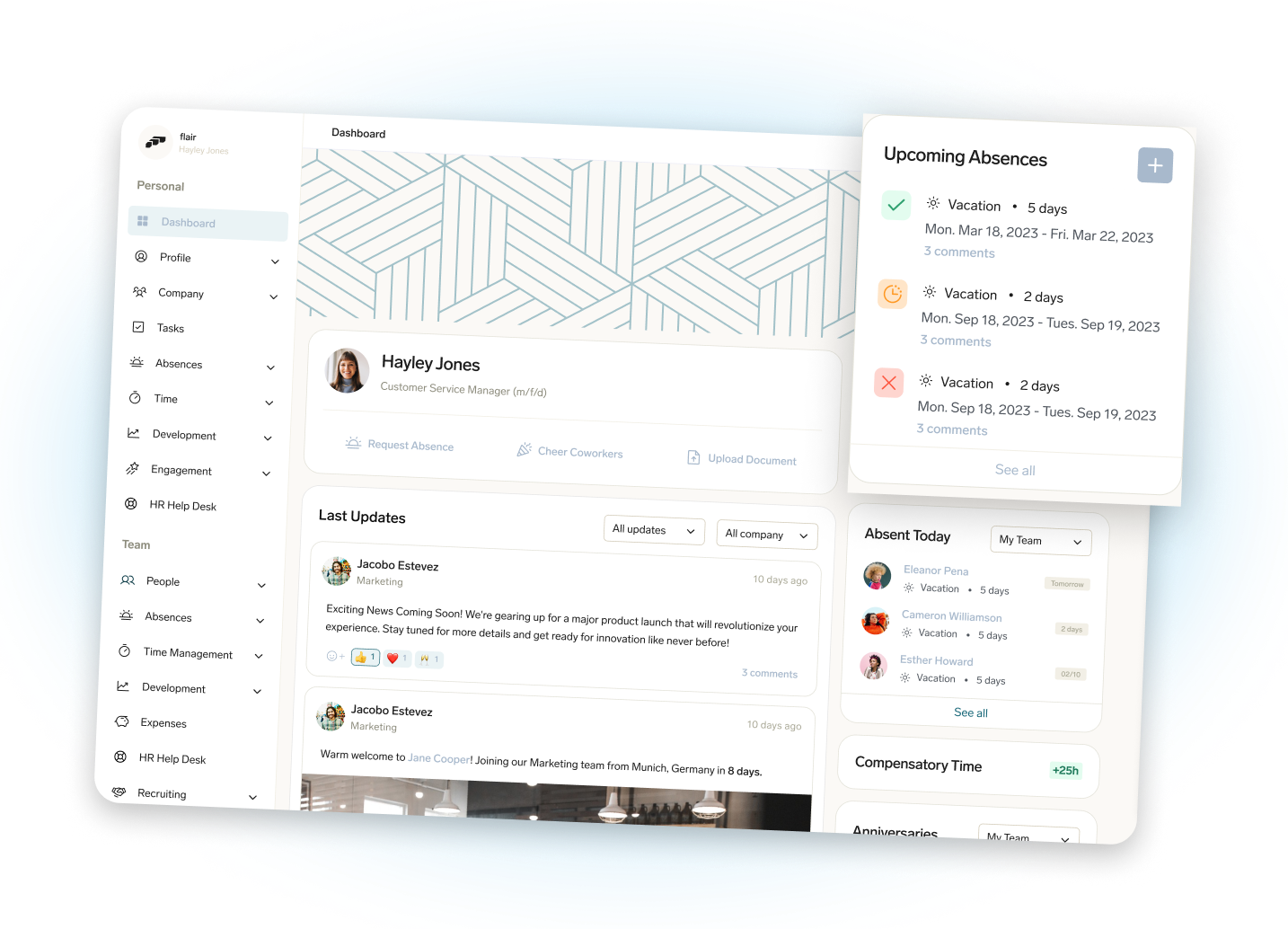


Ready to eliminate payroll fees, and simplify HR processes?
Discover how Sunrise HCM helps you automate payroll, HR, and billing with one secure and powerful Salesforce-native platform.
Keep Reading