Zenefits vs ADP
Compare Zenefits vs ADP on HR software features, payroll processing, pricing, and integrations. Find the right HR solution for your business with expert analysis from Sunrise HCM.
Most businesses don't go looking for payroll software. Something forces them into it: the spreadsheet breaks, a new hire's first week is chaos, benefits enrollment drags into week three. That's when the Zenefits vs ADP search starts. Zenefits (now TriNet HR Plus) was built for the founder who became HR director by accident. ADP was built for companies where a payroll error is a compliance event. One thing neither does: connect payroll to project billing. If your team tracks time against client work, you'll still need separate tools after this Zenefits vs ADP decision.
ADP vs Zenefits vs Sunrise HCM (Fast Facts)
Pricing verified March 2026. Visit vendor websites for current rates.
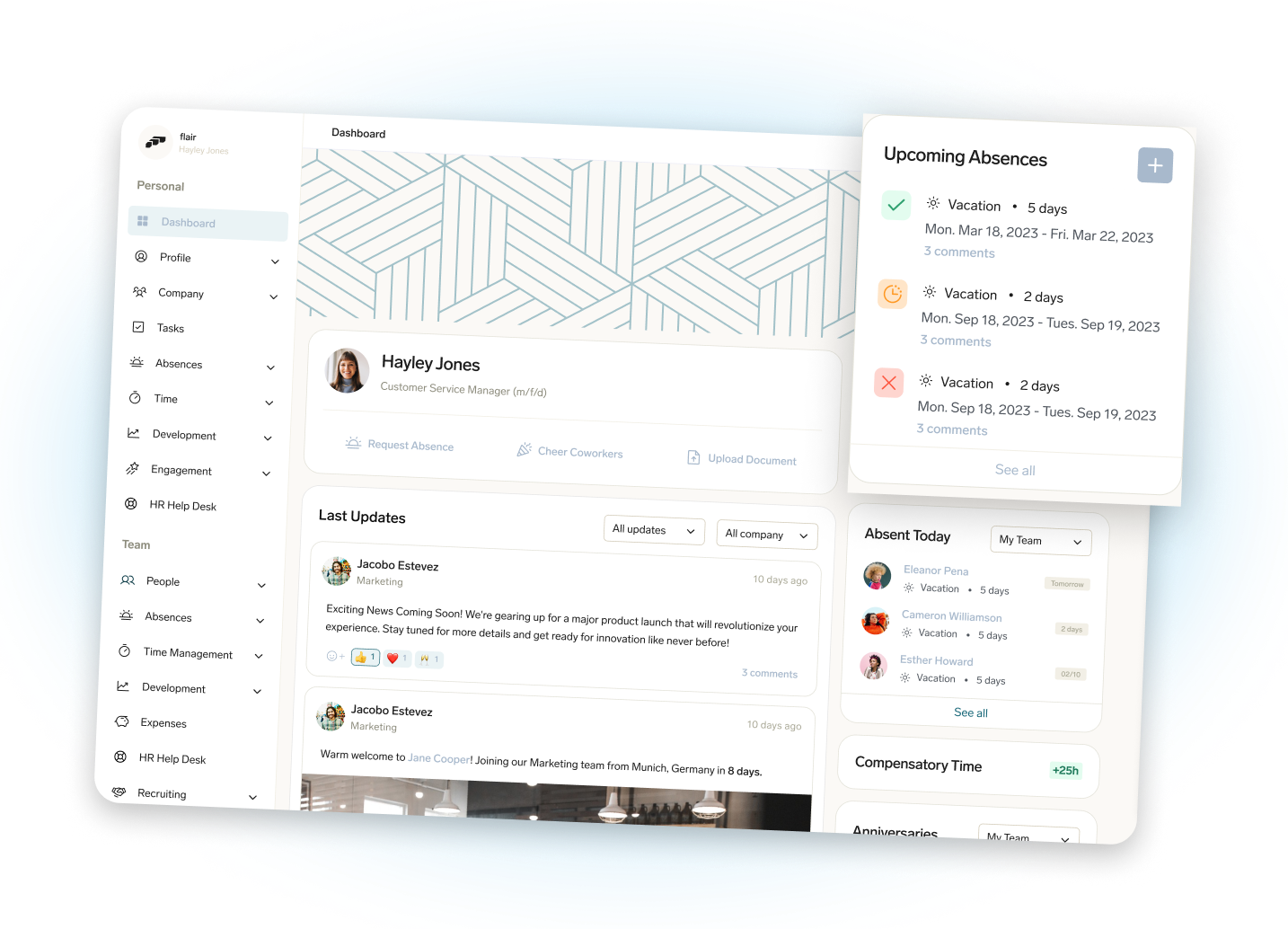
Overview of Zenefits
Features and Benefits
Zenefits has a genuinely strange origin story. It launched in 2012, became one of Silicon Valley's most-hyped startups almost overnight, then imploded publicly after serious regulatory violations, and was acquired by Francisco Partners-owned TriNet in February 2022, which rebranded it TriNet HR Plus. A lot of things changed. The original bet made it through intact: small businesses deserved HR software they could actually figure out.
Zenefits Quick Summary:
- Strength: All-in-one HR for small businesses with strong onboarding automation
- Integration: 30+ third-party connections; payroll available as an add-on
- Custom work: Limited customization; works best for standard HR workflows
- Cost: Starting at $8 per employee/month (annual billing); independent pricing research confirms three published tiers
Onboarding is where the platform earns its reputation. A new hire gets a link, signs their offer letter, chooses a health plan, sets up direct deposit, and completes tax forms before day one. No HR person involved. Time tracking and scheduling are included on every plan, worth noting because plenty of competitors charge extra for both.
Pricing Overview (verified March 2026):
- Essentials: $8/employee/month (annual). Onboarding, time tracking, scheduling, mobile app.
- Growth: $14/employee/month (annual). Adds compensation and performance management.
- Zen: $21/employee/month (annual). Full feature suite with additional tools.
Payroll, benefits administration using your own broker, and advisory services are available as add-ons.
Visit trinet.com for current rates.
Our Take: Zenefits does small-business HR better than most platforms at this price point. Setup is fast. Most teams are running payroll within a week. The honest limitation is scale: once headcount grows past 100-150 or payroll situations get complicated, the platform starts to feel like it's working against you. Best for small businesses that want modern HR without a dedicated HR team.
Limitations to Consider
Thirty integrations is fine until your team's most-used tool isn't one of them. Anything beyond standard small-business software probably means some manual exporting. Support is the other real limitation: HR Plus customers have chat only, and phone is reserved for PEO clients. That matters on a Friday when payroll is on the line. The ADP vs Zenefits gap here is real. ADP connects to hundreds of tools and offers more support channels.
Overview of ADP
Features and Benefits
ADP has been doing payroll since 1949. That number isn't trivia. It means their compliance team has spent decades building institutional knowledge around the situations that make other providers sweat: wage garnishments, multi-FEIN structures, union reporting, multi-state nexus issues, off-cycle corrections under deadline pressure. You don't end up running payroll for nearly one in six American workers without knowing the hard stuff.
ADP Quick Summary:
- Strength: Deep payroll compliance, global capabilities, option to outsource HR entirely
- Integration: 400+ marketplace connections, expanding open API
- Custom work: Modular by tier; customization increases with plan level
- Cost: Quote-based; industry research estimates starting around $79/month + $4-6/employee
ADP Run handles federal 941/940 filings, SUI, local tax compliance, multi-state nexus and reciprocity, and year-end W-2 and 1095-C reporting automatically. For companies that want to hand off HR entirely rather than just automate it, managed services make that possible.
Pricing Overview (verified March 2026):
ADP doesn't publish pricing. You'll need to go through their sales process to find out what you'll actually pay. Independent research puts the starting range around $79/month plus $4-6 per employee, but budget for 15-30% more once modules and implementation are added. The final number consistently runs above whatever you heard first.
Contact ADP directly for current quotes.
Our Take: ADP's payroll engine is hard to beat for complex situations. Implementation takes longer than most vendors admit. Budget 2-4 weeks minimum, more for multi-state or multi-entity setups. The interface rewards patience over intuition. Best for companies with dedicated HR staff or payroll situations complicated enough that they've already outgrown a simpler platform.
Limitations to Consider
Buying software without knowing the price until you're mid-negotiation is a frustrating experience, and ADP makes you do exactly that. The interface still feels designed for a dedicated HR professional rather than someone who just needs payroll done. Smaller accounts sometimes notice a gap between the support ADP advertises and what shows up when they call.
Zenefits vs ADP: In-Depth Comparison of Features, Costs, and More
At a glance: Zenefits runs on a purpose-built small-business database with around 30 integrations and a self-service-first design. ADP connects to 400+ third-party tools through a large marketplace and an expanding open API. Both are U.S.-focused, though ADP supports global payroll for international teams. Zenefits publishes transparent pricing; ADP does not. The clearest capability difference is managed services. ADP lets you hand off HR entirely, which Zenefits doesn't offer.
Payroll Processing
Both platforms cover the U.S. fundamentals for U.S.-based employers: automated tax calculations, direct deposit, multi-state filing, year-end W-2s. The ADP run vs Zenefits gap shows when something unusual enters the picture.
Zenefits' "three-click payroll" lives up to the name for most small businesses. Multi-state compliance is included on every plan and runs are fast. Garnishments and non-standard pay structures can require workarounds that feel clunky. ADP doesn't have that problem. Multi-FEIN operations, union reporting, off-cycle corrections: all handled without difficulty.
Winner: ADP. Better for complex payroll. Zenefits wins for small businesses that need fast, clean runs.
Time Tracking
Zenefits includes time tracking on every plan. Mobile clock-in with GPS, overtime calculations, PTO tracking, shift scheduling: all standard, and time data flows straight into payroll.
ADP's time and attendance tools are more capable but cost more to access. Biometric clock-ins and advanced scheduling are available if you need them.
Winner: Zenefits. Included at every plan level. ADP wins for complex workforce management needs.
Benefits Administration
With Zenefits, employees handle enrollment inside the same system they already use. You can work with TriNet's brokers or bring your own carrier relationships.
ADP handles more complex benefits situations: multiple plan types, direct carrier connections, dependent verification, detailed enrollment reporting.
Winner: ADP. Better for complex benefits structures. Zenefits wins for standard employee benefits.
Tax and Compliance
Zenefits covers U.S. tax compliance across all 50 states with automatic regulatory updates. For most small businesses, that's everything they'll run into. ADP's compliance infrastructure is built on 70-plus years of payroll processing and covers multi-country requirements for teams with international employees.
Winner: ADP. In the Zenefits vs ADP compliance picture, ADP has deeper expertise, especially for multi-state complexity and evolving regulations.
Onboarding and Ease of Use
This is the clearest split in the ADP vs Zenefits comparison. Zenefits was built for people who've never worked in HR. The onboarding sequence moves new users through offer letters, document signing, and benefits enrollment without prior knowledge required. Most people are functional the same afternoon they start. ADP carries its enterprise heritage throughout. Longer setup, more training, more navigation.
Winner: Zenefits. The Zenefits vs ADP usability gap is real: Zenefits is easier for most people to learn. ADP wins for organizations with dedicated HR teams.
Customer Support
Zenefits works fine for support until the moment you really need it to. HR Plus customers have chat. Phone is PEO-only. When something breaks mid-payroll run and you need a person immediately, that distinction matters a lot. ADP offers phone, chat, and email. Dedicated reps exist for larger clients, though the level of attention you get tends to track with how much you're spending.
Winner: ADP. More channels and more responsive help for higher-tier clients.
Cost Comparison
Zenefits puts their prices on the internet. A 50-person company on the Growth plan is looking at roughly $700 per month before payroll add-ons, verifiable in two minutes without talking to a single person. ADP requires a sales conversation. Independent analysts put the same company between $479-$879 per month once modules are included, before implementation fees are added on top.
Winner: Zenefits. On the ADP vs Zenefits cost question, transparent pricing, lower entry cost, and no surprises when the first bill arrives.
What Makes Sunrise HCM the #1 Alternative to Zenefits and ADP?
Both platforms do what they promise. What neither offers is a connection between payroll, time tracking, and client billing. The Zenefits vs ADP comparison won't surface this gap because both platforms have it. If your team bills hours to clients, you'll still be stitching together separate tools after you make this decision.
Built on Salesforce, No Salesforce Required
Sunrise HCM runs on Salesforce, but you don't need an existing instance or separate license. It's included in your subscription. Your data lives in a database trusted by banks, hospitals, and government agencies for 20+ years. Existing Salesforce customers get discounted pricing based on licenses already held.
Real-Time Data Integration
Single time entry flows to both Salesforce payroll and client billing automatically. Update an employee's role and it cascades across Salesforce time and expense tracking and billing instantly. No export files, no overnight syncs, no monthly reconciliation. The platform connects to thousands of business systems through standard open APIs.
Enterprise Security by Design
SOC 2 Type II compliance, encryption in transit and at rest, role-based access control, and multi-factor authentication all come standard. Fortune 500-level security, without the infrastructure overhead.
True Scalability
Multi-tenant architecture means everyone is always on the current version. Three releases per year. Zero downtime. No upgrade fees.
U.S.-Based Support Included
Every client gets a dedicated U.S.-based relationship manager and a named backup at no extra cost. No premium tier to unlock. No offshore call centers.
Transparent Pricing
- $16 per employee per month
- $48 per functional manager per month
- $58 per HR Manager per month
- $58 base fee per month
Everything included: payroll processing, tax filing, W-2s, Salesforce HRIS, time tracking, expense management, and Salesforce billing software. No per-payroll fees. No transaction fees. No surprises. Discounted pricing for nonprofits, government organizations, and educational institutions.
When Sunrise HCM makes sense:
- You need payroll and project billing connected in one system
- You want enterprise security without managing the infrastructure
- You value pricing you can actually predict
- You're a professional services firm tracking billable time
When to stick with Zenefits or ADP:
- You only need payroll and basic HR without billing integration
- Zenefits' entry price fits your budget and your needs are genuinely simple
- You need global payroll for international teams (Sunrise is U.S.-only)
- You want ADP's managed services to take HR off your hands entirely
Implementation timeline: 8-12 weeks, including full configuration, training, and parallel payroll runs.
Contact us to see how payroll, HR, time, and billing work together in one system.
Final Words on ADP Run vs Zenefits
The Zenefits vs ADP decision is one of the easier calls in HR software. These two platforms aren't competing for the same customer. In the ADP vs Zenefits comparison, Zenefits wins for small businesses that want modern, affordable HR without negotiating a contract. ADP wins when payroll is complicated, compliance is non-negotiable, or outsourcing HR entirely is the goal.
Neither was built for professional services firms. If client billing is part of how your business runs, the ADP run vs Zenefits comparison is worth doing. Just know it won't answer all your questions.
For more ADP comparisons, see our ADP vs Paychex, UKG vs ADP, ADP vs Paycom, and ADP vs Workday breakdowns.
Frequently asked questions
Does Zenefits still exist?
Yes, just under a different name. TriNet acquired Zenefits and rebranded it TriNet HR Plus. The platform covers payroll, HR, onboarding, benefits, and time tracking. It's still running and still serving small and midsize businesses. Different logo, same product.
Why are companies moving away from ADP?
Usually a few things combined: pricing that's hard to know before you're already in a negotiation, support that can feel thinner for smaller accounts, and an interface with a steeper learning curve than most owners want. Companies that need payroll tied to project billing also run into a wall fast. That's simply not a workflow ADP was built for. If pricing transparency is the core issue, our ADP vs Gusto breakdown is a useful companion to this one.
Who is ADP's biggest competitor?
At the enterprise level, Workday and UKG are the closest match. In the mid-market, Paylocity and Paychex come up most often. For small businesses looking specifically at ADP Run, Gusto and Zenefits tend to show up on the same shortlists.
Which payroll software is best?
Depends entirely on your situation. Zenefits fits small businesses that want affordable, self-service HR without a long ramp-up. ADP fits when payroll is genuinely complicated or outsourcing HR entirely is the goal. Sunrise HCM is built for U.S.-based professional services firms that need payroll, HR, time tracking, and client billing running in one system.
Pricing data verified from official vendor websites and independent analyst research as of March 2026. User review data sourced from G2, Capterra, and TrustRadius.



Ready to eliminate payroll fees, and simplify HR processes?
Discover how Sunrise HCM helps you automate payroll, HR, and billing with one secure and powerful Salesforce-native platform.
Keep Reading